How to Help Preschoolers Make a Calm-Down Plan That Works
Your child has just learned that the blue cup is in the dishwasher. The disappointment is huge. In the moment, “calm down” is unlikely to give them much to work with. But there is a useful question you can practice long before the blue-cup emergency: “What is your calm-down plan?”
That question is not magic, and it will not stop every meltdown. Still, a recent pilot study offers an encouraging reason to make room for it. Preschoolers can begin to put a coping idea into words, and having an idea was linked with lower physical stress during a frustrating task. For parents, the practical lesson is small and kind: help your child collect a few doable options while everyone is calm.
What the Research Found
In a 2024 study published in Translational Issues in Psychological Science, University of Massachusetts Amherst researchers Zachary Bivins and Adam Grabell studied 59 children ages 3 to 5. The children played a purposely frustrating computer game, then talked through an idea for staying calm before playing again. Researchers measured skin conductance, a marker of physiological arousal, during the task.
Among the 55 children with usable data, 38, or 69%, could name a feasible strategy. Their ideas ranged from specific actions such as taking deep breaths to broader plans such as trying not to get mad. During the frustrating parts of the game, children who named a strategy had lower average skin-conductance responses than children who did not name one.
It is important not to stretch this result. This was a small pilot study, not proof that asking a child to name a plan causes them to be calmer in every hard moment. The researchers also found no meaningful group difference in how quickly arousal rose or returned to baseline. And some children may need more language, more adult help, or simply more time. What the study does show is that a simple “what could you do?” question is developmentally possible for many preschoolers and worth practicing.
What This Means for Your Family
Emotion regulation is a skill set, not a personality test. The American Psychological Association notes that it draws on attention, planning, language, and cognitive development, and that children develop these skills at different rates. So if your 3-year-old answers “I don’t know,” that is information, not failure. Offer one small option, then try again another day.
The best time to make a plan is not while a child is already overwhelmed. The APA recommends talking about feelings and coping strategies when things are calm, then practicing through role-play. That makes a calm-down plan more like a fire drill than a lecture in the middle of the fire.
Keep the plan concrete and short. “I will take three balloon breaths,” “I will squeeze my pillow,” “I will ask for help,” or “I will get a drink of water” gives a child something they can picture. You can also use a character from When I Feel Angry to ask, “What could they try when they feel mad?” Talking about a character can feel safer than talking directly about a hard moment.
5 Things You Can Try This Week
1. Ask the question during an ordinary, calm moment. Try it during breakfast, bath time, or a walk: “When you feel frustrated, what could help your body feel calmer?” Let your child answer in words, gestures, or by choosing between two ideas. There is no need to turn it into a quiz.
2. Build a tiny menu together. Pick two or three options that are realistic in your home: breathe slowly, hug a stuffed animal, stomp outside, ask for a cuddle, or sit in a cozy spot. More choices are not always better for young children. A small menu is easier to remember.
3. Practice the plan through pretend play. NAEYC suggests puppets as a way to introduce feeling words and work through conflicts. Let a puppet be upset because a block tower fell down. Ask your child what the puppet could do first. Then let the puppet try it. This playful rehearsal helps keep the focus on learning rather than correcting.
4. Think out loud about your own plan. NAEYC also recommends letting children hear your problem-solving process. You might say, “I am frustrated that we are running late. I am going to take one slow breath and get my shoes.” You are not asking your child to manage your feelings for you. You are showing that adults use plans too.
5. Support first, coach later. When your child is in the thick of a big feeling, stay nearby, use a calm voice, and keep language simple. You might say, “You are really mad. I’m here.” Once they are settled, revisit the plan briefly: “Next time, should we try your balloon breaths or ask for a hug?” If distress is regularly interfering with school, health, family life, or friendships, the APA advises seeking guidance from a psychologist or another behavioral health professional.
The Bottom Line
Preschoolers do not need perfect self-control. They need repeated, supportive chances to notice a feeling, name one next step, and borrow calm from a caring adult. The Bivins and Grabell study gives parents a promising, carefully limited finding: many young children can articulate a strategy before frustration, and that ability was associated with lower arousal during the task.
Start with one question and one simple plan. Read a feelings story, try a puppet conversation, or make a picture card together using the My Big Feelings printables. Over time, your child may begin to reach for those words and choices when life does not go their way. That is real practice, even when it is messy.
Sources
Bivins, Z., & Grabell, A. (2024). Early Childhood Emotion Regulation Strategy Articulation, its Neurophysiological Correlates, and Association with Psychopathology. Translational Issues in Psychological Science, 10(4), 417-434. University of Massachusetts Amherst. This was a pilot study of 59 children.
Weir, K. (2023). How to help kids understand and manage their emotions. American Psychological Association.
National Association for the Education of Young Children. Building Social and Emotional Skills at Home.
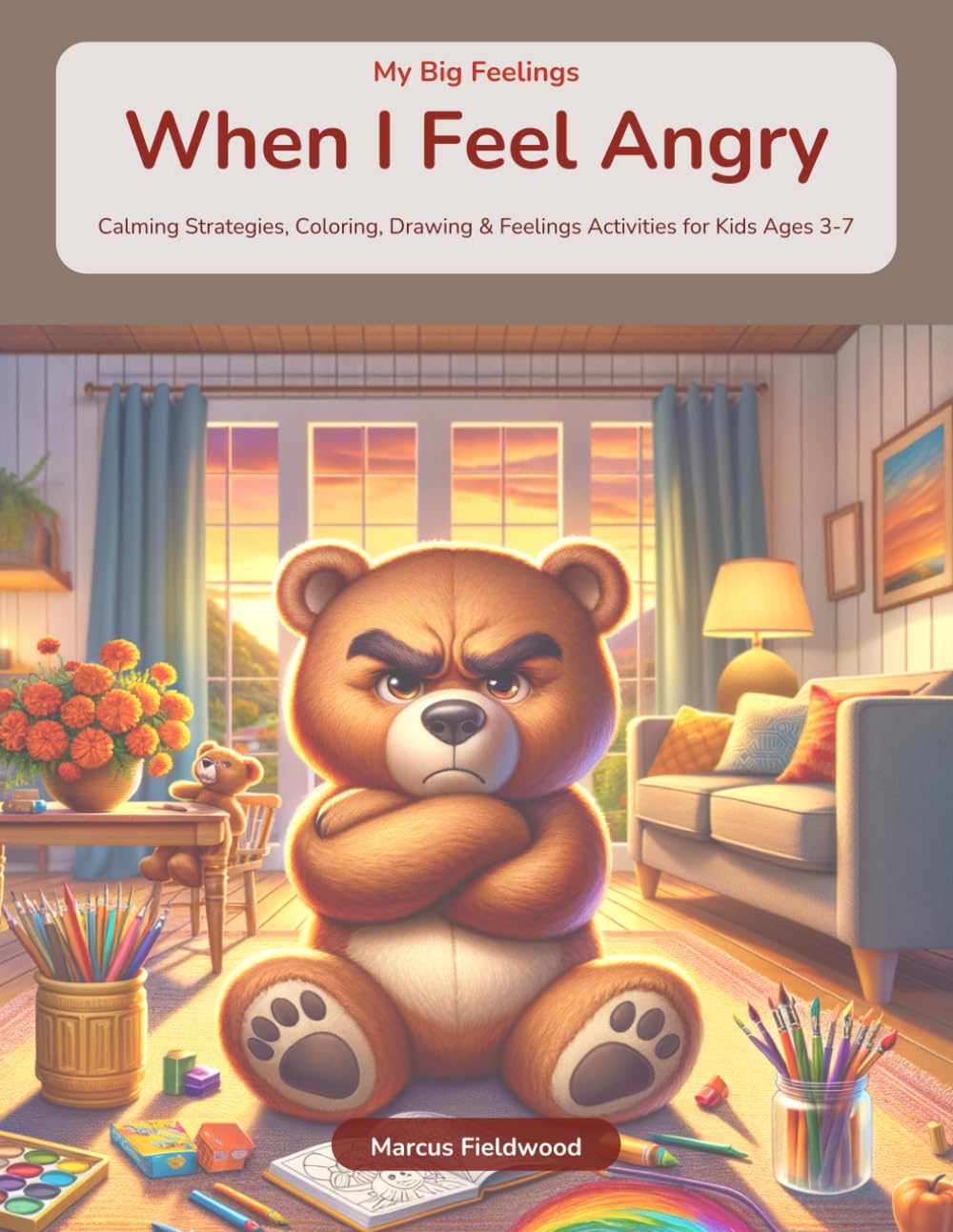
📚 When I Feel Angry
Anger Management Activity Book for Kids Ages 3-7. 80 pages of hands-on activities.
Buy on Amazon for $14.99