Why Your Child's Anxiety Is Normal (And What You Can Do About It)
That Knot in Your Stomach When Your Kid Is Worried
Your 3-year-old won't let go of your leg at daycare drop-off. Your 5-year-old asks "what if" questions at bedtime until you're both exhausted. Your 4-year-old suddenly refuses to go to birthday parties she used to love.
And you're thinking: Is this normal? Is this anxiety? Should I be worried about my worried child?
Take a breath. Let's talk about what's actually going on.
Child Anxiety Is More Common Than You Think
Here's something that might surprise you: anxiety in young children is incredibly common. Studies show that about 1 in 5 kids experience notable anxiety before age 8. And even the other 4 out of 5 will go through anxious phases.
Toddler anxiety often looks different from what we picture. It's not a child sitting in a corner wringing their hands. It's:
- Refusing to try new foods (not pickiness — fear)
- Meltdowns before school or activities
- Tummy aches and headaches with no medical cause
- Asking the same worried question over and over
- Needing to know exactly what's going to happen, all the time
- Sudden clinginess or regression (wanting to be carried, baby talk)
If you're reading that list nodding, your child is not broken. Their brain is doing exactly what it's designed to do.
Why Young Brains Are Wired for Worry
Between ages 2 and 7, kids go through a massive leap in cognitive development. They can suddenly imagine things that haven't happened yet — which is wonderful for creativity and terrible for anxiety.
A 2-year-old doesn't worry about monsters because they can't really imagine the future. A 4-year-old absolutely can. They can picture the monster. They can picture you leaving and not coming back. They can picture the dog biting them.
Their imagination is outpacing their logic. They can dream up the scary thing, but they can't yet reason their way out of it. That gap is where anxiety lives.
So when your child seems more worried than their peers, it often means their imagination is developing faster than their reasoning skills. That's not a disorder. That's a developmental stage.
When Is It More Than a Phase?
Most child anxiety is developmental — it shows up, peaks, and fades as their brain matures. But it's worth talking to your pediatrician if:
- The anxiety is getting worse over several months, not better
- It's stopping them from doing things most kids their age do (going to school, playing with friends, sleeping in their own bed)
- They seem anxious most of the day, most days
- You notice compulsive behaviors (rituals they MUST do, or things they need to check repeatedly)
Trusting your gut matters here. You know your kid. If something feels off, it's always okay to ask a professional.
5 Things You Can Do Right Now
1. Validate Before You Fix
When your 5-year-old says "I'm scared of the dark," it's tempting to say "There's nothing to be scared of!" But to them, there IS. Dismissing the fear doesn't make it go away — it just teaches them not to tell you about it.
Try instead: "The dark feels really scary to you. I get that. Want to tell me what part feels scariest?"
You're not agreeing that monsters are real. You're telling your child that their feelings are real. That's the foundation everything else builds on.
2. Create a Worry Routine
For kids who worry at bedtime (which is most of them), create a short "worry time" ritual. Give them 5 minutes to tell you their worries. Listen. Then do something physical to "put the worries away" — drop them in an imaginary box, blow them out the window, draw them and crumple up the paper.
This works because it contains the worry. It gives it a boundary. Your child learns: I have a time and place for my worries, and then I can let them go.
3. Teach the "Brave Steps" Approach
If your child is avoiding something because of anxiety — birthday parties, swimming lessons, sleeping alone — don't push them into the deep end. But don't let them avoid it forever either. Avoidance feeds anxiety like oxygen feeds fire.
Break it into tiny steps:
- Scared of birthday parties? Step 1: Drive past the house. Step 2: Go in for 10 minutes with you right there. Step 3: Stay for cake.
- Scared of the dark? Step 1: Dim the lights while you're in the room. Step 2: Nightlight with door open. Step 3: Nightlight with door mostly closed.
Celebrate each step. "You stayed for 10 whole minutes! Your brave muscles are getting stronger!"
4. Give Them Tools They Can Hold
Abstract advice doesn't land with a 4-year-old. But a tangible tool? That's different.
- A "brave bracelet" they can squeeze when they're nervous
- A small toy from home in their pocket at school
- An activity book they can work through when worried feelings show up — coloring, drawing how they feel, practicing breathing exercises on the page. (When I Feel Worried is one we made specifically for this — 56 pages of hands-on activities that help kids process anxiety through play instead of just talk.)
Physical tools give kids a sense of control. And control is the opposite of anxiety.
5. Watch Your Own Anxiety
This is the uncomfortable one. Kids are emotional sponges. If you're anxious about their anxiety — hovering, over-preparing, constantly asking "are you okay?" — they pick up on it. Your worry tells their brain: There IS something to be afraid of.
You don't have to hide your feelings. But practice projecting calm confidence, even when you're faking it a little. "You've got this. And I'll be right here." Said calmly. Said like you mean it. Even when your own stomach is in knots.
You're Already Doing the Hard Part
The fact that you searched for help with your child's anxiety? That means you're paying attention. You're taking their feelings seriously. You're trying to understand instead of just reacting.
That matters more than any technique. A worried child with a parent who sees them, believes them, and stays steady? That child is going to be okay.
Anxiety in young children is common, it's manageable, and in most cases, it gets better with time, patience, and connection. You don't have to fix it overnight. You just have to keep showing your child that their feelings are safe with you.
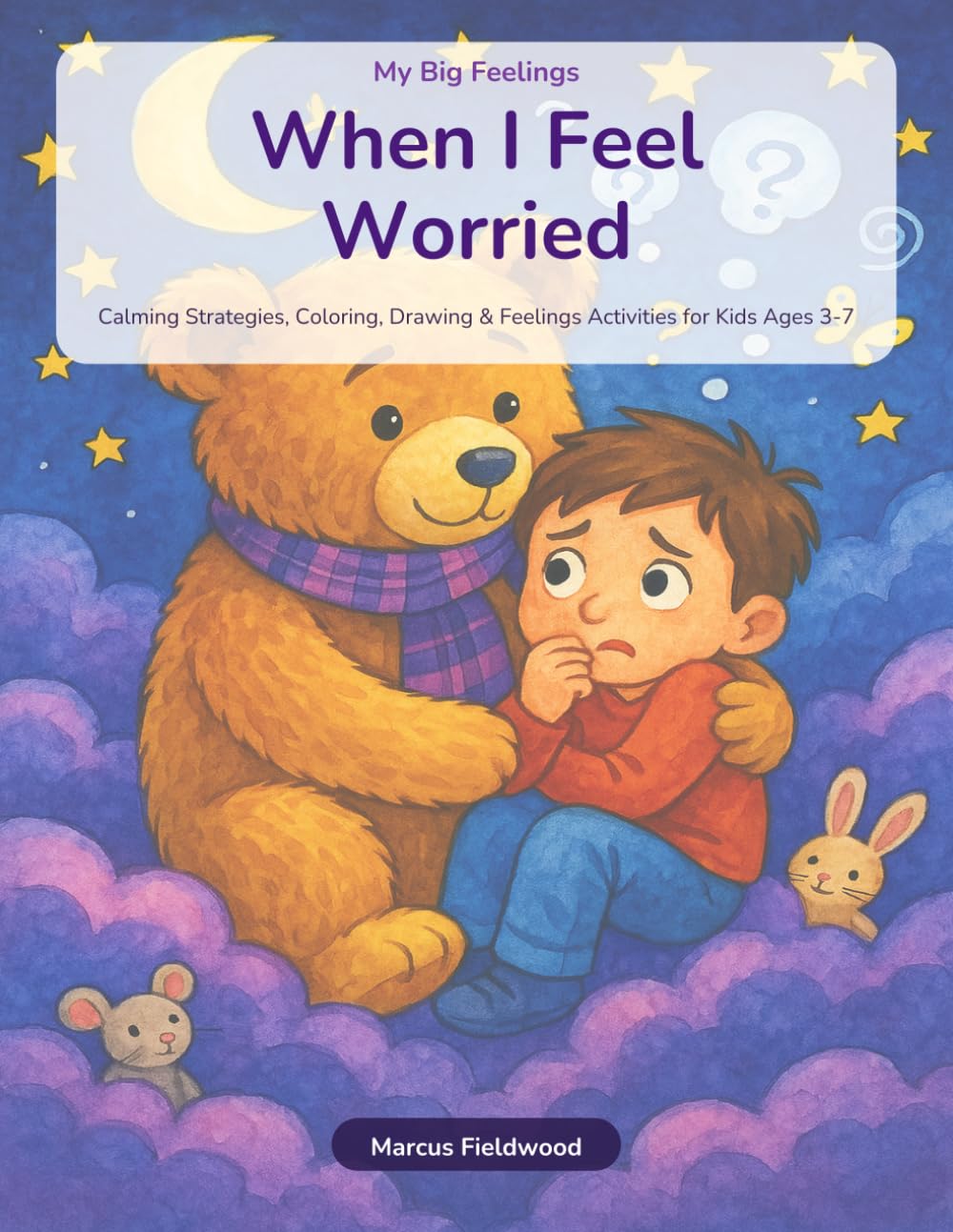
📚 When I Feel Worried
Anxiety Relief Activity Book for Kids Ages 3-7. 56 pages of hands-on activities.
Buy on Amazon for $14.99