New Research: Early Emotion Skills Protect Kids Into Their Teens
You're sitting on the kitchen floor with your five-year-old, who just threw a shoe at the wall because their sandwich was cut in triangles instead of squares. In that moment, it's hard to imagine that what you do next could matter ten years from now. But according to a major new study — it really does.
What the Research Found
A 2025 study led by Dr. Aja Murray at the University of Edinburgh, published in the Journal of Affective Disorders, tracked thousands of children from the UK Millennium Cohort Study — a nationally representative sample of kids born in Britain at the start of the century. The researchers measured children's ability to regulate their emotions at age 7, then followed up at ages 11, 14, and 17.
The findings were striking: children who struggled with emotional regulation at age 7 were significantly more likely to experience anxiety and depression throughout their entire adolescence — all the way through age 17. This held true even after the researchers accounted for prior mental health difficulties, parenting style, socioeconomic background, sleep habits, and cognitive ability.
What makes this study especially powerful is the methodology. Dr. Murray's team used a technique called counterfactual analysis, which mathematically mimics a controlled experiment. They compared children from similar backgrounds who differed mainly in how well they managed their emotions. The message? It's not just that anxious kids become anxious teens — it's that emotion regulation skills themselves appear to be a genuine protective factor.
Why This Matters Right Now
If your child is between 3 and 7, you're in a critical window. The Edinburgh study pinpoints age 7 as a meaningful turning point, but we know from developmental science that the foundations of emotional regulation are built much earlier — starting in toddlerhood.
And here's a second piece of recent research that fits perfectly with this finding: a 2026 study by Dan Kang and colleagues at Hunan Normal University, published in Frontiers in Psychiatry, looked at 806 children aged 5–6 and found that higher screen exposure was associated with lower emotion regulation abilities. But here's the hopeful part — the quality of parent-child interaction actually buffered this effect. When parents engaged in warm, responsive interactions with their kids, the negative link between screens and emotional regulation weakened or even disappeared.
In other words: you don't need to be a perfect screen-time gatekeeper. What matters most is that you're showing up, connecting, and helping your child learn to navigate their feelings.
What This Means for Your Family
These two studies together paint a clear picture: the emotional skills your child is building right now — in your kitchen, at bedtime, during playground arguments — are laying down the tracks for their mental health as a teenager. That's not meant to add pressure. It's actually incredibly empowering, because it means the small, everyday moments of emotional coaching are having a much bigger impact than you think.
You don't need a therapy degree to do this well. You just need a few practical strategies and the willingness to sit with your child in their big feelings instead of rushing past them.
5 Things You Can Try This Week
1. Name it to tame it. When your child is upset, help them put a word to what they're feeling: "It looks like you're feeling really frustrated right now." Research consistently shows that labeling emotions helps children's brains shift from reactive mode to processing mode. Books like When I Feel Angry and When I Feel Worried from the My Big Feelings series can give kids a vocabulary for their emotions during calmer moments.
2. Co-regulate before you correct. Before addressing the behavior (throwing the shoe, slamming the door), first get on their level, use a calm voice, and help them feel safe. The Edinburgh study measured dysregulation as things like intense mood swings and becoming easily overwhelmed — these aren't character flaws, they're skills that need a calm adult to model them first.
3. Build in "feelings check-ins." Pick a regular time — maybe dinner or the drive home from school — and ask: "What was the best part of your day? What was the hardest?" Keeping these conversations light and routine normalizes talking about emotions, which is the first step in learning to manage them.
4. Prioritize connection over screen limits. Inspired by the Frontiers in Psychiatry study, instead of stressing over exact screen time minutes, focus on what happens around screens. Watch a show together and talk about how the characters feel. Have a no-phone window during meals. The research suggests it's the quality of your interactions that protects your child's emotional development — not a perfectly enforced timer. You can also use printable activities as a fun screen-free way to explore emotions together.
5. Practice when they're calm, not just in crisis. Role-play scenarios: "What could you do if someone takes your toy and you feel really mad?" Practice deep breathing as a game, not a punishment. The more your child rehearses these skills when they're regulated, the more accessible those skills become in the heat of the moment.
The Bottom Line
The next time you're in the middle of a meltdown — theirs or yours — remember this: the research says that helping your child learn to handle big emotions isn't just about surviving today. It's genuinely protecting their mental health for the decade ahead.
You won't do it perfectly, and that's okay. The Edinburgh study found that even modest improvements in emotion regulation made a meaningful difference. Every time you pause, get curious instead of reactive, and help your child name what they're feeling, you're building something that lasts.
So tonight, when the bedtime feelings spiral begins, take a breath. You're not just getting through the day — you're laying the foundation for a healthier, more resilient teenager. And that's a pretty amazing thing to be doing with a bedtime story and a hug.
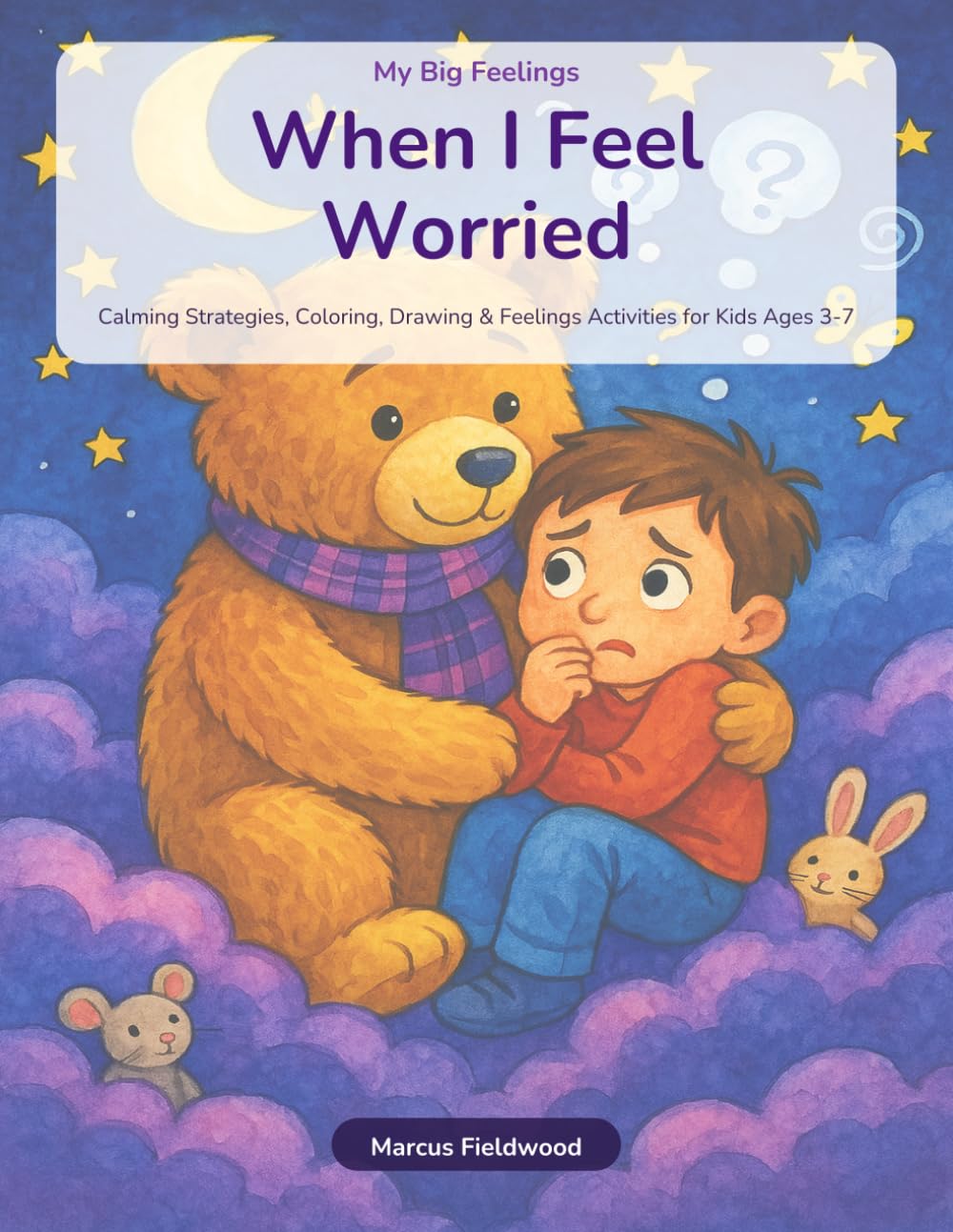
📚 When I Feel Worried
Anxiety Relief Activity Book for Kids Ages 3-7. 56 pages of hands-on activities.
Buy on Amazon for $14.99