Why Outdoor Play Protects Your Child's Mental Health
That Magic "Go Outside" Moment
You know that feeling when your kids have been cooped up inside all day and everyone's a little… unhinged? The whining ramps up, the sibling squabbles multiply, and by 4 PM you're wondering if bedtime can come early. Then you send them outside for 20 minutes and suddenly — peace. Everyone's calmer, happier, more themselves.
Turns out, that's not just your imagination. A major new study published in June 2026 confirms what many parents have sensed all along: outdoor play during the preschool years has a real, lasting protective effect on children's mental health — and the benefits extend well beyond the afternoon you send them out.
What the Research Found
Researchers at the University of Exeter, led by Professor Helen Dodd, analyzed data from 4,151 children in Scotland's Growing Up in Scotland cohort study. They tracked how often children played outdoors between ages 2 and 4, then followed their mental health through ages 4, 5, 6, and 8.
The results, published in the Journal of Child Psychology and Psychiatry, were striking: for each additional day per week that a preschooler played outside, their odds of maintaining good mental health through age 8 increased by 6 to 14 percent.
That's not a small number. It means a child who plays outdoors five days a week instead of two has meaningfully better odds of avoiding both anxiety and depression (what researchers call "internalizing" symptoms) and behavioral difficulties like aggression and hyperactivity ("externalizing" symptoms).
What makes this study especially important is that it's the first longitudinal study to show this connection over time — not just a snapshot of one moment. Previous research showed kids who play outside more tend to be happier right now, but this is the first to demonstrate that early outdoor play predicts a healthier mental health trajectory years later.
The researchers also carefully controlled for other factors — family income, parental education, whether the family had a garden, access to a park, parental employment, even the parent's own mental health. The outdoor play benefit held up across all of these variables.
What This Means for Your Family
If you're a parent of a young child, this research is genuinely encouraging — because it suggests that one of the most powerful things you can do for your child's emotional wellbeing is also one of the simplest: get them outside to play, as often as you can.
You don't need a fancy backyard or a membership to a nature program. Professor Dodd emphasized that informal spaces matter enormously — "parks and other green spaces, informal spaces close to home" are all beneficial. A trip to the neighborhood playground, splashing in puddles on the sidewalk, or digging in the dirt at a local park all count.
This is especially reassuring if you're navigating the preschool years and watching your child wrestle with big feelings like anger or worry. Outdoor play isn't a replacement for teaching emotional skills — it works alongside those efforts. When children play outside, they naturally encounter small challenges (climbing something tricky, negotiating turns on a slide, handling a scraped knee) that build emotional resilience in a low-stakes way.
The study also found that outdoor play helps with what researchers call "adventurous play" — activities that involve uncertainty and a little bit of risk. Think climbing trees, balancing on logs, or running fast. These experiences help children develop a healthy relationship with the physical sensations of excitement and nervousness, which may help prevent anxiety from taking root.
5 Things You Can Try This Week
The beauty of this research is that it doesn't require a dramatic overhaul of your routine. Even adding one or two more days of outdoor play per week makes a measurable difference. Here's how to make it happen:
1. Make "outside time" a daily default, not a reward. Instead of treating outdoor play as something that happens when the schedule allows, build it in as a non-negotiable part of the day — even if it's just 15-20 minutes before or after dinner. Consistency matters more than duration.
2. Embrace boring outdoor spaces. You don't need a destination playground every time. A patch of grass, a driveway with chalk, a few sticks and rocks — young children are remarkably creative with unstructured outdoor time. Some of the richest play happens in the least Instagram-worthy settings.
3. Dress for the weather, then go anyway. One of the biggest barriers to outdoor play is weather. Invest in rain boots and a waterproof jacket, and reframe rainy or chilly days as sensory adventures. Puddle-jumping is basically a free therapy session for preschoolers.
4. Let them take small risks. Resist the urge to hover. When your child climbs a little higher than feels comfortable or runs a little faster than you'd like, they're building exactly the kind of emotional resilience this research highlights. Stay close enough to help if needed, but far enough to let them problem-solve.
5. Pair outdoor play with feelings conversations. After outdoor time, you might notice your child is calmer and more receptive. This can be a great time to read a My Big Feelings book together or use a feelings check-in printable — they'll be more regulated and open to the conversation.
A Note About Screens
It's worth noting that while this study focused specifically on outdoor play, related research from the Digital Wellness Lab at Boston Children's Hospital (also published June 2026) highlights the flip side: using screens to calm upset children may actually hinder their ability to develop emotional regulation skills over time. Children ages 3 to 5 who were frequently given devices to manage emotions showed higher levels of emotional reactivity.
The takeaway isn't that screens are evil — it's that outdoor play and active coping strategies build the internal skills children need to manage emotions, while screens may temporarily soothe without building those skills. When you can swap a screen-based calm-down for an outdoor one, your child gets a double benefit.
The Bottom Line
This landmark study from the University of Exeter gives parents a powerful, evidence-based reason to prioritize something that's free, accessible, and enjoyable: getting your preschooler outside to play. Each extra day of outdoor play per week during ages 2-4 meaningfully increases the chances your child will maintain strong mental health through elementary school and beyond.
You don't need to be perfect about it. You don't need to plan elaborate nature excursions. You just need to open the door a little more often and let your child do what comes naturally — run, explore, climb, dig, splash, and play. Their future self will thank you for it.
Source: Dodd, H.F., Cordwell, K., Hesketh, K., Johnstone, A., de la Torre-Luque, A., & McCrorie, P. (2026). "Early Outdoor Play Predicts Trajectories of Child Mental Health in a Population-Based Cohort." Journal of Child Psychology and Psychiatry. University of Exeter, University of Glasgow, University College London, and Complutense University of Madrid.
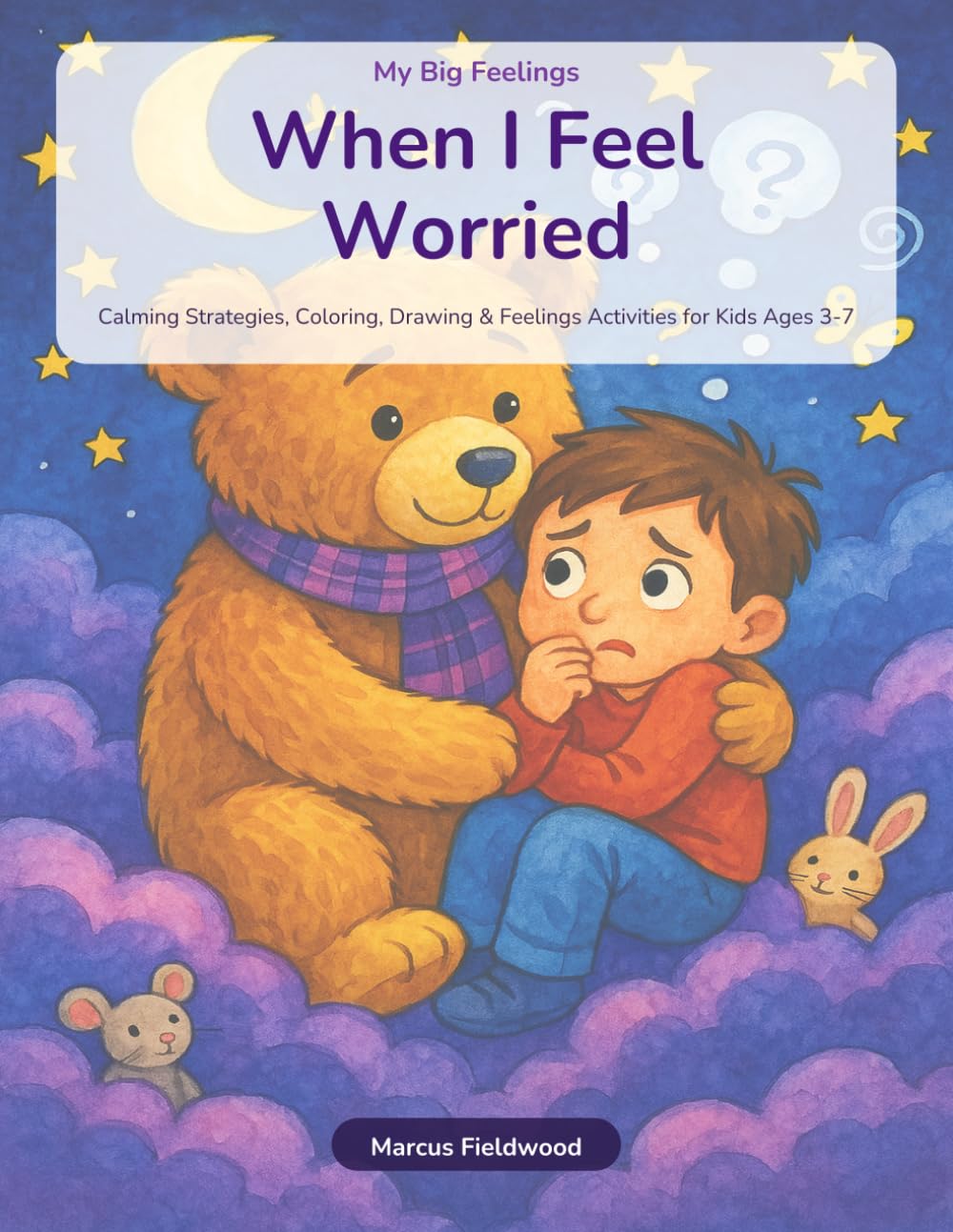
📚 When I Feel Worried
Anxiety Relief Activity Book for Kids Ages 3-7. 56 pages of hands-on activities.
Buy on Amazon for $14.99