Worry Monsters and Worry Jars: Creative Ways to Help Anxious Kids
When Worry Gets Stuck Inside
Your 5-year-old can't sleep because "something bad might happen." Your 4-year-old refuses to go to school because "what if you don't come back?" Your 6-year-old asks the same nervous question fourteen times in a row, and no amount of reassurance makes it stop.
Anxiety in young kids is tricky because the feelings are huge but the words are small. Most preschoolers and kindergartners can't explain what they're afraid of — and even when they can, talking about it doesn't always help. Sometimes it even makes things worse, because now they're thinking about the worry MORE.
That's where creative, hands-on anxiety activities for kids come in. Instead of asking your child to talk about their worries, you give them a way to externalize them — to take the invisible, swirling thing in their head and turn it into something they can see, touch, draw, or even throw away.
Here are some of the best ones.
The Worry Monster
This is one of the most effective tools for anxious children, and it's dead simple.
How It Works
A worry monster is a stuffed creature with a mouth — usually a zippered pocket — that "eats" worries. Your child writes or draws their worry on a piece of paper, feeds it to the monster, and zips the mouth shut. The monster holds the worry so your child doesn't have to.
How to Make One
You can buy a worry monster (they're all over the place), but making one together is better. Here's a simple version:
- Take an old sock or small stuffed animal
- Glue or sew on googly eyes and felt teeth
- Cut a slit for a mouth (or use the sock opening)
- Decorate it together — the wilder, the better
Name it. Give it a personality. Our family's worry monster is called "Gobbles" and he lives on the nightstand. He's very hungry. He only eats worries. And once he eats one, it's gone.
Why It Works
The psychology behind worry monsters is called externalization — separating the child from the feeling. When your 4-year-old feeds a worry to Gobbles, they're telling their brain: "This worry isn't part of me. I can put it somewhere else." That shift — from "I AM worried" to "I HAVE a worry and I can do something with it" — is powerful.
It also creates a ritual around worry time, which gives anxiety a boundary. "Let's feed your worries to Gobbles before bed" is a lot more concrete than "try not to worry."
The Worry Jar
Similar idea, different container. And some kids respond better to this one.
How It Works
Get a jar (mason jar, old peanut butter jar, whatever you have). Decorate it together. Call it the Worry Jar.
When your child has a worry, they write it down (or you write it for them, or they draw a picture of it) on a small piece of paper. Fold it up. Drop it in the jar. Put the lid on.
The worry is now in the jar. Not in their head.
Three Versions That Work Well
- The "Empty It" Jar: Once a week, open the jar together and read the worries. "Does this one still bother you? No? Let's rip it up." Kids love the destruction part. Crumple, rip, stomp on it. Make it physical.
- The "Shrink It" Jar: Fill the jar with water and drop in the worry (written in washable marker on a strip of paper). Watch the words dissolve and disappear. Great visual metaphor for worries fading.
- The "God/Universe/Grown-Ups Will Handle It" Jar: For families where it fits, some worries go in a "things I can't control" jar. The message: some worries are too big for kids, and grown-ups will take care of them. This relieves the burden of feeling responsible for everything.
Why It Works
The worry jar activity does two things at once. First, it gives the worry a physical form — which makes it feel manageable instead of endless. Second, it creates a clear moment of letting go. Dropping the paper in the jar is a micro-ritual that tells the brain: "I've dealt with this. I can move on now."
For bedtime worriers (which is most anxious kids), doing the worry jar right before stories creates a transition: worry time is OVER. Story time is NOW. That boundary matters.
More Creative Anxiety Activities for Kids
Worry Stones
Find a smooth, flat rock. Your child decorates it however they want — paint, stickers, markers. It becomes their worry stone. When they feel anxious, they rub the stone in their pocket. The smooth texture is grounding, and having a physical object gives them a sense of control.
Pro tip: Let your child pick the stone themselves. A trip to the park to find "the perfect worry stone" turns the whole thing into an adventure instead of a therapy session.
The Worry Box
Like a worry jar but a decorated shoebox. The advantage? You can put more in it — not just paper worries, but drawings, objects that represent fears, even small toys that symbolize the worry. One child I know put a toy spider in her worry box because she was scared of spiders. "The box is keeping the spider. Not me." She slept through the night.
Draw Your Worry, Then Change It
Ask your child to draw their worry as a picture. Big. Detailed. Get it all out.
Then: change it. Add a silly hat to the scary thing. Give the monster a tutu. Draw yourself bigger than the worry. Color over it with your favorite color until it disappears.
This is a technique child therapists use regularly. The act of changing the image rewires how the brain stores the fear. It's not about pretending the worry doesn't exist — it's about showing your child that they have power over it.
Activity books focused on worry and anxiety use this exact approach. When I Feel Worried from the My Big Feelings series is full of drawing prompts, coloring pages, and creative exercises that help kids externalize and shrink their anxious feelings — page by page, crayon by crayon.
Balloon Worries
For a once-in-a-while activity (not daily — balloons add up): blow up a balloon. Have your child whisper their worry into it. Then choose: pop it (the worry explodes and is gone) or let it go (the worry floats away and disappears). Both options are incredibly satisfying for a 4-year-old.
Note: If your child is scared of the popping sound, stick with the release option. The point is catharsis, not a new fear.
Tips for Making These Activities Actually Stick
Any of these tools can be a one-time craft project that collects dust. Here's how to make them part of your family's routine:
- Keep it visible. The worry monster lives on the nightstand. The worry jar sits on the kitchen counter. If it's out of sight, it's out of mind — and your child won't reach for it when they need it.
- Make it THEIR thing. Let them name the monster. Let them decorate the jar. Let them choose which technique to use. Ownership equals engagement.
- Don't push it during panic. When your child is in full anxiety mode, their brain can't access creative strategies. Stay calm, stay close, ride the wave. Then, once they've settled a bit: "Want to feed that worry to Gobbles?"
- Validate first, always. Before the jar, before the monster, before anything: "That sounds like a really big worry. I'm glad you told me." If your child feels dismissed, no tool in the world will work.
- Use them yourself. Write your own worry and drop it in the jar. "I was worried about my meeting tomorrow, so I put it in the jar." This normalizes anxiety AND models the coping strategy. Double win.
The Goal Isn't Zero Worry
Let's be honest: you can't eliminate anxiety from your child's life. And you shouldn't try. Some worry is protective. Some worry is developmentally normal. A 5-year-old who worries about a new school is having a healthy response to uncertainty.
The goal is to teach your child that worry is manageable. That it's something they can take out of their head, look at, play with, and put away. That they're bigger than their worries, even when the worries feel enormous.
A worry monster can't do that alone. Neither can a jar or a stone or a drawing. But combined with your calm presence, your validation, and your consistency? These tools give anxious kids something they desperately need: a sense of control over feelings that feel uncontrollable.
Pick one. Make it today. Put it somewhere your child can reach. And the next time worry visits, you'll both have something to do about it besides "try not to think about it."
That's a pretty good start.
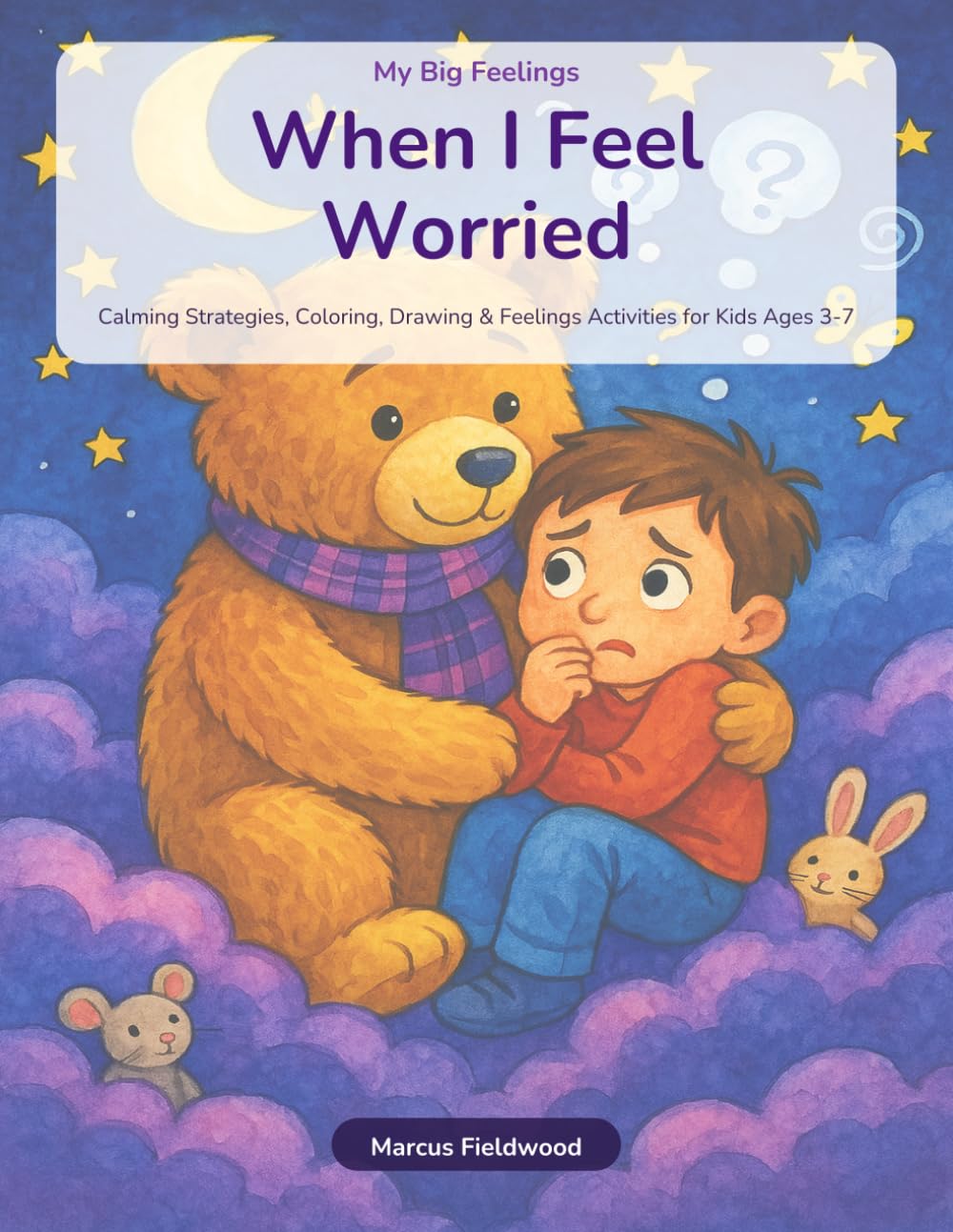
📚 When I Feel Worried
Anxiety Relief Activity Book for Kids Ages 3-7. 56 pages of hands-on activities.
Buy on Amazon for $14.99